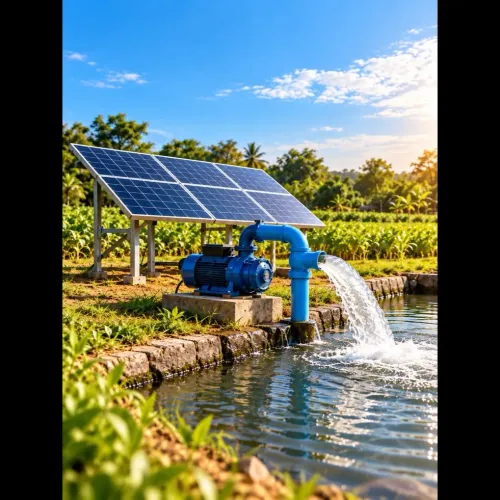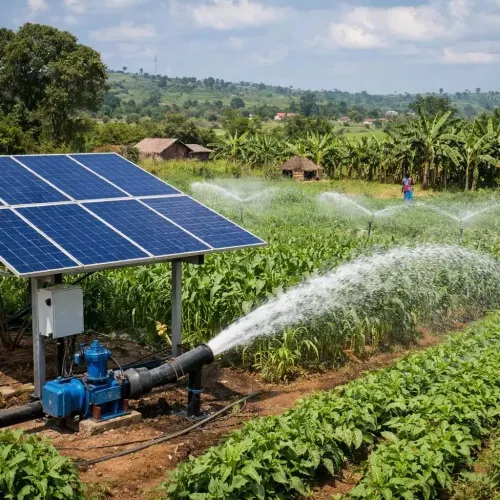
Modern agriculture needs dependable water, efficient irrigation, and sustainable energy solutions. Solar-powered water pumping systems combine renewable solar energy with advanced pump technology to help farmers manage irrigation and agricultural water requirements more efficiently.
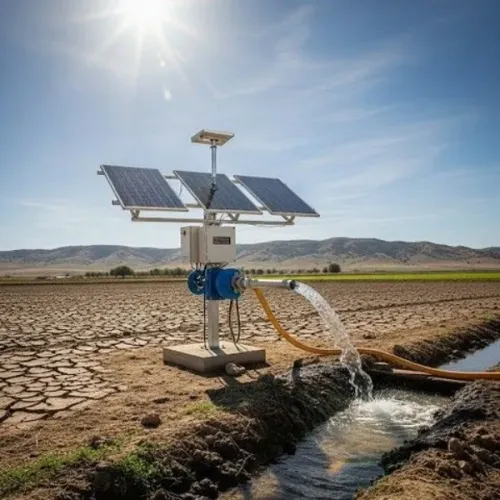
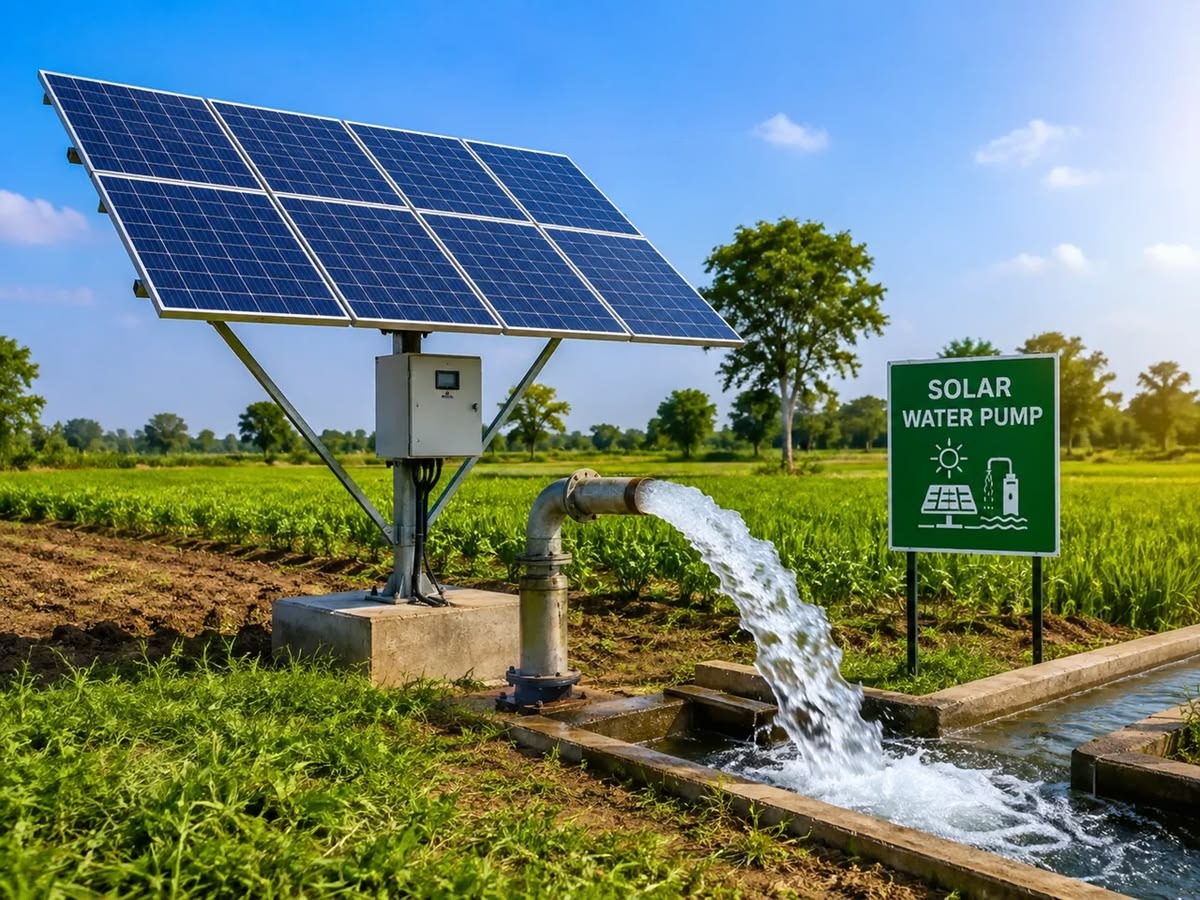
A solar water pump converts electricity generated by solar photovoltaic (PV) panels into mechanical energy for pumping water. Depending on the application, the system can draw water from borewells, open wells, ponds, reservoirs, or other suitable water sources and deliver it to agricultural fields, storage tanks, drip irrigation systems, or sprinkler networks.
By using sunlight as an energy source, solar pumping provides an alternative to conventional electricity- and fuel-powered pumping for suitable applications. A properly designed system can help reduce dependence on conventional energy while supporting sustainable agricultural water management.
💧 Borewell water pumping
🌾 Farm and field irrigation
🚜 Drip irrigation systems
💦 Sprinkler irrigation systems
🌊 Surface-water pumping
🚰 Water transfer to storage tanks
🐄 Livestock and farm water supply
🌱 Agricultural water distribution
Key Benefits of Solar-Powered Water Solutions
Renewable Energy for Pumping
Solar pumps use sunlight as a renewable energy source, helping farmers adopt cleaner energy for water pumping.
Reduced Conventional Energy Dependence
For suitable applications, solar pumping can reduce reliance on diesel fuel or conventional grid electricity.
Efficient Irrigation Support
The correct pump and system configuration can deliver water according to the farm's required flow and pumping conditions.
Sustainable Agriculture
Combining renewable energy with efficient irrigation supports responsible energy and water management.
Flexible Applications
Solar pump systems can be designed for different water sources, pumping depths, irrigation methods, and farm requirements.
WhatsApp: 7875756765
Address-Lekha nagar. Nashik
Keywords